
Surrogates
Surrogacy in Northern Cyprus: Laws, Parentage, Citizenship & Risks
Northern Cyprus is often marketed as an affordable surrogacy destination, but recent legal cases show serious risks for intended parents, children, and surrogate mothers. From unclear parentage and immigration issues to ethical concerns and limited legal recognition, families should think carefully before pursuing surrogacy in Northern Cyprus.
When researching international surrogacy destinations, Northern Cyprus can appear attractive at first glance. It is often marketed as relatively affordable, accessible from Europe, and part of a growing fertility tourism market. For intended parents facing high costs, long wait times, or limited options in their home country, it can seem like a shortcut.
But the reality is far more complicated.
Recent court cases and legal warnings have shown that surrogacy arrangements connected to Northern Cyprus can expose intended parents, children, and surrogate mothers to serious legal, immigration, and ethical risks. In some cases, families have faced years of uncertainty, children have been left without clear nationality or immigration status, and intended parents have had to go through complex legal proceedings just to be recognized as parents.
At Expecting.Ai, we believe every intended parent deserves clear, honest, and transparent guidance. Before considering surrogacy in Northern Cyprus, here are the risks you need to understand.
There Are Two Very Different Jurisdictions in Cyprus
One of the biggest sources of confusion is the word “Cyprus” itself.
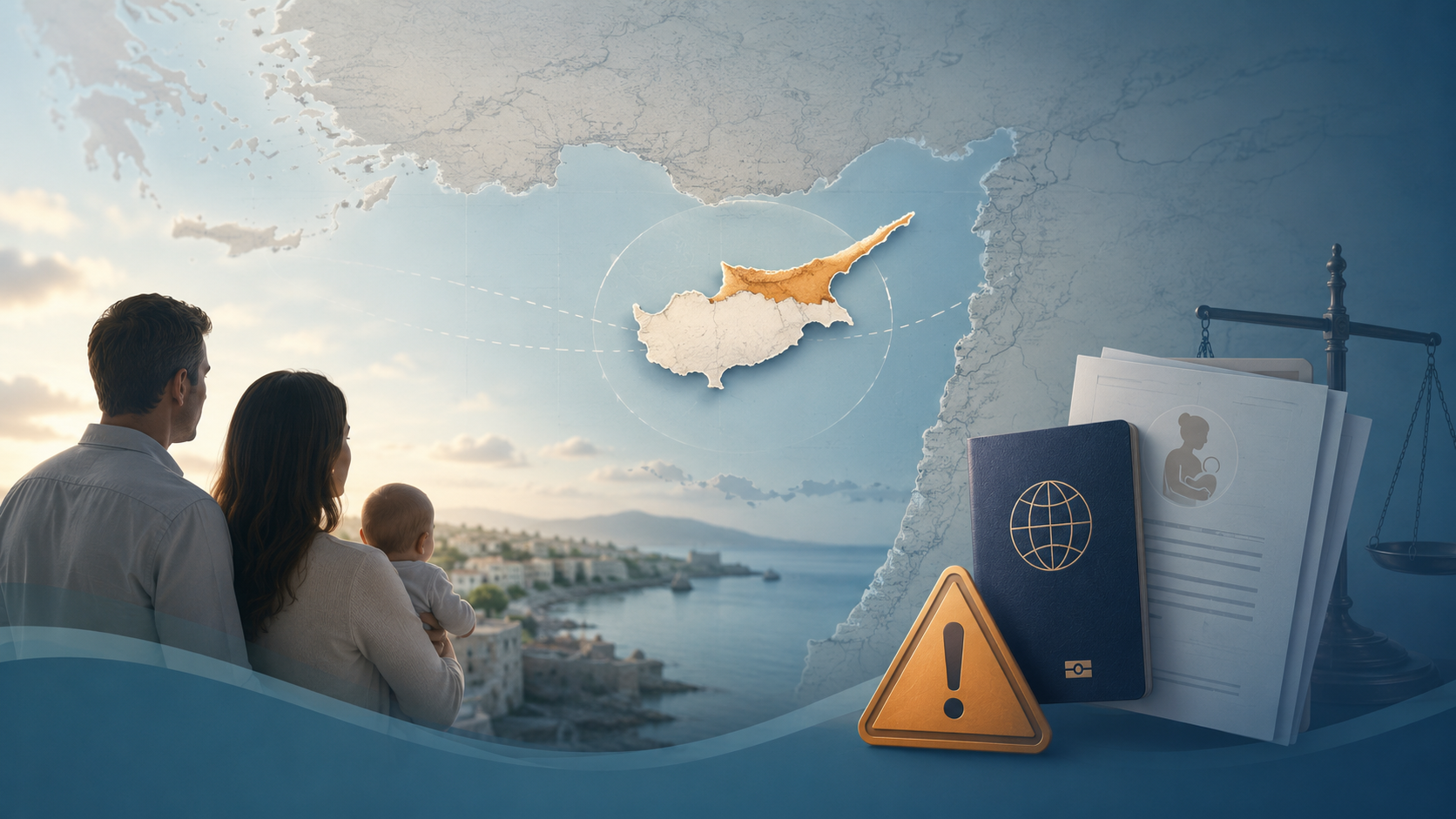
The island of Cyprus is politically divided. The Republic of Cyprus, in the south, is an internationally recognized EU member state. Northern Cyprus, officially known as the Turkish Republic of Northern Cyprus, or TRNC, is a self-declared state recognized only by Turkey.
That distinction matters enormously in surrogacy.
Some clinics and agencies may market programs as being in “Cyprus,” which can create confusion between the Republic of Cyprus and Northern Cyprus. Intended parents may believe they are entering a regulated, internationally recognized jurisdiction, when in reality the arrangement may be taking place in a region with limited international recognition and serious legal uncertainty.
In one UK High Court case, the intended parents believed they were working with a clinic in Southern Cyprus, only to later discover that the clinic was operating in Northern Cyprus.
The Legal Reality: A High-Risk and Uncertain Framework
Surrogacy in Northern Cyprus operates in a legally uncertain and high-risk environment.
UK courts have described surrogacy arrangements connected to Northern Cyprus as unlawful or deeply problematic. In one 2025 UK High Court case, the court stated that the clinic was operating in the Turkish Republic of Northern Cyprus, where surrogacy was understood by the court to be unlawful, and where the placement of children with same-sex couples was also not permitted by law.
This matters because intended parents should not only ask whether a clinic is willing to perform a procedure. They must ask whether the arrangement will produce legally recognized parentage, valid documentation, nationality for the child, and a safe path home.
In many international surrogacy arrangements, the biggest problems do not appear at the embryo transfer stage. They appear after birth, when parents need birth certificates, passports, immigration approval, and recognition of parental rights.
Children Can Be Left in Legal Limbo
One of the most serious risks is that a child born through a Northern Cyprus surrogacy arrangement may be left without clear nationality, immigration status, or legally recognized parents.
In the 2025 UK case, a same-sex couple paid approximately £120,000 to a clinic they believed was based in Southern Cyprus. The children were born through an arrangement connected to Northern Cyprus. According to the judgment, the children did not obtain Northern Cypriot citizenship, did not obtain Ukrainian nationality through the surrogate mothers, and were initially refused entry to the UK by the Home Office. It took around four years before they were able to enter the UK.
The court ultimately had to consider adoption as the only available legal route for the intended parents to become the children’s legal parents.
For intended parents, this is a powerful warning. Even where everyone wants the children to be safely raised by the intended parents, the legal system may not provide a simple or automatic solution.
Recent UK Court Cases Have Issued Serious Warnings
Northern Cyprus has appeared in several recent UK family court cases involving foreign surrogacy arrangements.
In one 2024 case, the court highlighted multiple concerns about a foreign surrogacy arrangement, including uncertainty over the legal framework, the location of embryo transfer, the surrogate’s living arrangements during pregnancy, birth registration, and whether same-sex couples were permitted to enter surrogacy arrangements in the relevant jurisdiction.
In another 2025 case, the arrangement was facilitated by Dogus IVF Centre in Northern Cyprus and a surrogacy agency. The case again showed how international surrogacy can create difficult questions around consent, legality, parental responsibility, and the welfare of the child.
In a further 2025 case, the President of the Family Division issued a strong warning about unlawful foreign surrogacy arrangements and made clear that adoption or parental orders should not be assumed in future cases.
The common lesson from these cases is clear: foreign surrogacy arrangements in legally unclear jurisdictions can create severe risks for intended parents and children, even when the intended parents acted out of a genuine desire to build a family.
Parental Rights Are Not Automatic
Many intended parents assume that if they provide the embryos, pay for the process, and are named in clinic documents, they will automatically be recognized as the child’s legal parents.
That assumption can be dangerous.
In many surrogacy arrangements, the woman who gives birth may be treated as the legal mother at birth. Depending on the jurisdiction, the intended parents may then need a court order, adoption order, parental order, or other legal process to become recognized as the child’s legal parents.
When Northern Cyprus is involved, this becomes even more complicated because TRNC documents may not be recognized or may have limited recognition in many countries. A document that appears valid locally may not solve the intended parents’ legal problem in their home country.
This can lead to a painful reality: the intended parents may have a baby they deeply love, but still face a long legal process before their parentage is officially recognized.
The Surrogate Welfare Problem
Legal risk is not the only concern. Surrogate welfare is also a major issue.
When surrogacy takes place in a poorly regulated or legally uncertain environment, surrogate mothers may be more vulnerable to exploitation, lack of informed consent, inadequate medical protection, and poor legal representation.
In the 2025 UK case, the court noted that the clinic appeared to operate at some scale and used women from Ukraine as surrogate mothers.
This raises important ethical questions. Were the surrogate mothers fully informed? Did they have independent legal advice? Did they understand the intended parents’ circumstances? Were they protected medically, emotionally, and financially? What would happen to them if a dispute arose?
For intended parents, surrogate welfare should never be a secondary issue. A responsible surrogacy journey must protect everyone involved: the child, the intended parents, and the surrogate.
The Low-Cost Illusion
Northern Cyprus is often marketed as a lower-cost alternative to the United States, Canada, or other regulated surrogacy destinations.
But the advertised price is not the full cost.
If a surrogacy arrangement leads to immigration delays, legal proceedings, adoption applications, extended stays abroad, disputes over parentage, or difficulty obtaining travel documents, the total cost can become much higher than expected.
In one reported UK case, the intended parents paid approximately £120,000 to the clinic before facing years of legal and immigration complications.
The real cost of an international surrogacy journey is not just the clinic fee. It is the total legal, emotional, financial, and practical burden of bringing the child safely home and securing recognized parentage.
What About Legitimate Surrogacy in Cyprus?
It is important to distinguish Northern Cyprus from the Republic of Cyprus.
The Republic of Cyprus has a legal framework for medically assisted reproduction and surrogacy, subject to strict rules. Surrogacy generally requires prior approval, court involvement before embryo transfer, and compliance with eligibility and residence requirements. Commercial surrogacy is not treated the same way as in some other jurisdictions.
This is completely different from a clinic or agency offering a “Cyprus” surrogacy package without clearly explaining where the procedure, pregnancy, birth, and legal parentage process will take place.
If a provider says the program is in “Cyprus,” intended parents should ask immediately:
Which Cyprus?
Is it the Republic of Cyprus or Northern Cyprus?
Which court will approve the arrangement?
Which country will issue the birth certificate?
Which country will recognize the intended parents as legal parents?
How will the child receive nationality and travel documents?
If these answers are vague, inconsistent, or delayed, that should be treated as a serious red flag.
Questions Every Intended Parent Should Ask Before Any International Surrogacy Journey
Before engaging any international surrogacy clinic, agency, or coordinator, intended parents should ask:
- Exactly which country will each stage of the process take place in?
- Is surrogacy legally permitted in the country where the embryo transfer will occur?
- Is surrogacy legally permitted in the country where the surrogate will live during pregnancy?
- Is surrogacy legally permitted in the country where the birth will occur?
- Will the intended parents be recognized as legal parents at birth?
- Will the child receive citizenship or nationality?
- Which country will issue the child’s passport or travel documents?
- Will the intended parents’ home country recognize the arrangement?
- Does the surrogate have independent legal advice?
- Has the surrogate given fully informed consent?
- What happens if the surrogate changes her mind?
- What happens if immigration authorities refuse entry?
- What happens if the home country refuses to recognize the birth certificate?
- What legal process will be required after birth?
- Who is responsible if something goes wrong?
These questions may feel uncomfortable, but they are essential. A trustworthy provider should be able to answer them clearly, directly, and in writing.
There Are Safer Paths Forward
Surrogacy is already an emotional, complex, and deeply personal journey. Intended parents should not have to add avoidable legal uncertainty, immigration risk, or ethical concerns to an already challenging process.
Northern Cyprus may appear to offer a faster or more affordable path, but recent legal cases show that it can become one of the longest and most painful detours imaginable.
At Expecting.Ai, we work with vetted surrogacy providers in jurisdictions with clearer legal frameworks, better oversight, and stronger protections for intended parents, children, and surrogates. Our goal is not only to help families find a match, but to help them move forward safely, transparently, and responsibly.
If you are exploring surrogacy options and want honest guidance, speak with the team at Expecting.Ai. We can help you understand your options, compare safer paths, and avoid arrangements that may put your future family at risk.
Final Thought
The most important question in surrogacy is not simply, “Can this be done?”
The better question is:
Can this be done safely, legally, ethically, and in a way that protects everyone involved?
When it comes to surrogacy in Northern Cyprus, intended parents should think very carefully before moving forward.